Author: Elizabeth Smith, Director of Product Management, Patient Engagement at Suvoda
Snapshot:
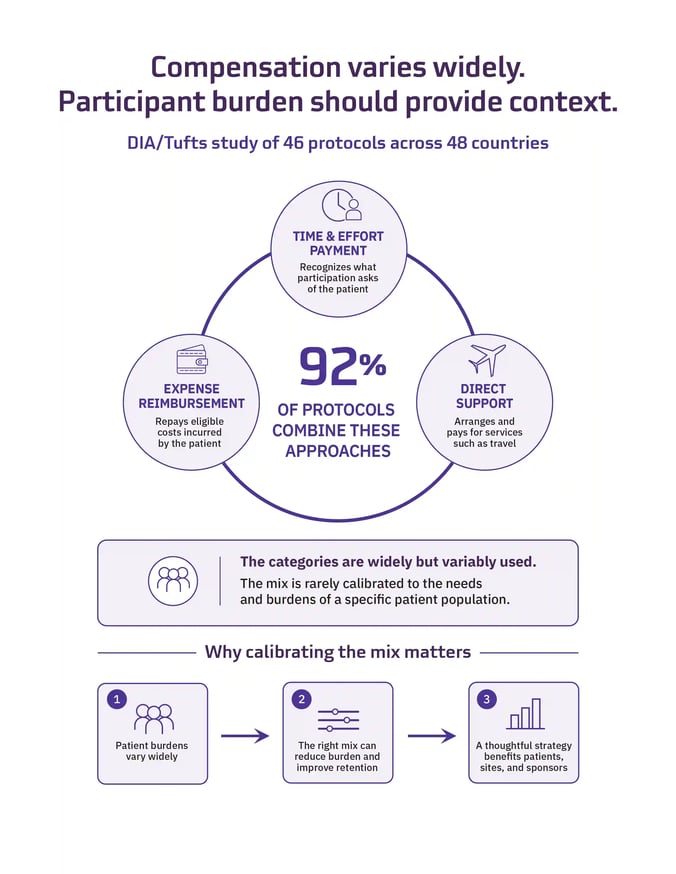
- Compensation strategy is an important trial design decision. A DIA/Tufts CSDD study of 46 protocols found 92% combine payment, expense reimbursement, and support (like travel arrangements), but few sponsors calibrate that mix to what a specific patient population needs.
- Digital participant payment methods were associated with higher enrollment rates than cash and checks.
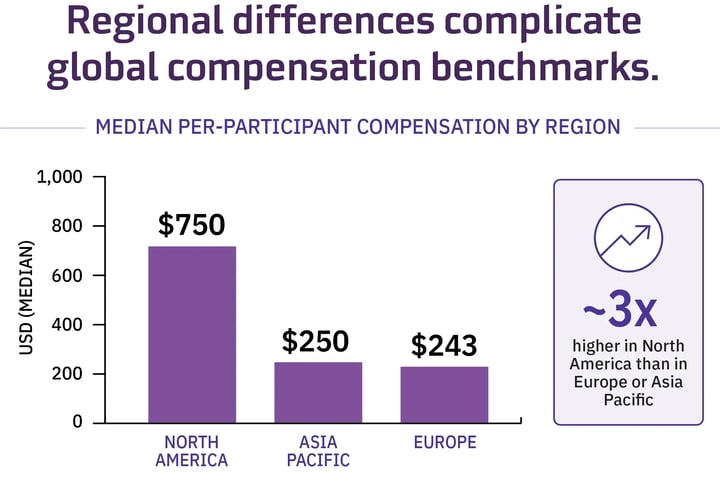
- Compensation amounts vary widely by region. North America's median runs 3x Europe's, and the industry still has no benchmarks regarding participant payments and can vary by trial phase or therapeutic area.
Are we making it easier for people to stay enrolled in clinical trials? Working in patient engagement at Suvoda, that question is my core driver. The question is also why Suvoda supported the DIA (Drug Information Association) and Tufts Center for the Study of Drug Development research consortium on clinical trial participant compensation.
Last month, I had the opportunity to participate in a panel at DIA 2026 presenting the findings from this study. The research reveals helpful data about today's reality and challenges pertaining to clinical trial patient compensation.
Patient payment method shapes clinical trial enrollment and retention
The study examined 46 protocols from 11 companies, conducted across 48 countries. The study data on payment method found that the majority (78%) of protocols used a hybrid combination of payment methods. Only 18% used digital payments as the primary approach.
The wide variation in practices makes it difficult to isolate any single factor. However, the directional signal is consistent with what we hear directly from sites and patients: the mechanism of payment is critical. A patient in a rural area for whom a paper check requires a trip to town, a caregiver managing everything through a phone—these are not edge cases. When the payment mechanism creates obstacles for those patients, a barrier has been built into the study from the start.
Payment infrastructure rarely gets the same scrutiny as site selection or exclusion criteria, and the study data suggests that more examination of participant payment complexity is warranted.
Covering travel costs directly helps patients and reduces site burden
The compensation model in many studies still asks study participants to pay travel costs up front and submit for reimbursement which puts the financial burden on the people least positioned to absorb it. A patient managing a rare disease or a late-stage oncology diagnosis is often dealing with income disruption alongside heightened health challenges and care costs. Asking them to pay travel expenses up front and wait for reimbursement risks losing them from the study altogether.
The more effective approach is one where the trial arranges travel logistics and covers costs directly on the participant's behalf, so patients don't have to pay travel-related costs out-of-pocket. That shift also benefits sites, which are often caught in the middle of reimbursement administration. When travel support flows directly from the sponsor's budget rather than through the site, the administrative burden on sites decreases and the financial experience for patients improves. Budget structure and patient experience are often treated as separate issues, but this data suggests they are the same issue.
Nearly every protocol combines pay, reimbursement, and support. Few calibrate the mix.
Ninety-two percent of the protocols examined used a hybrid compensation structure combining some mix of time and effort payment, expense reimbursement, and support (e.g., travel arrangement services). That near-universal adoption is encouraging. Sponsors understand that participant burden is multidimensional, and that different components deserve different compensation approaches.
The in-depth interviews were more nuanced, however. Compensation assessment remains largely unsystematic and ad hoc. Most companies rely on patient and investigate site feedback, but no standard benchmarks of compensation were revealed.
In practice, the study found that sponsors often combine the right categories without weighing them against the burdens that patients experience in their study. A participant's time commitment in a late-phase CNS trial may look very different from one in an early-phase dermatology study, for example. Visit frequency, caregiver involvement, the economic vulnerability of the patient population, the physical and emotional toll of the indication all shape what compensation needs to accomplish. The data shows high variation in compensation amounts and approaches even within this relatively small dataset. The field has not yet settled on a consistent way to set compensation based on what a study asks of patients.
The benchmarking impulse can lead sponsors astray
Sponsors want reference points, so benchmarking patient compensation across the board is a natural instinct. But the study data illustrates precisely why benchmarking across therapeutic areas, geographies, or phases, without accounting for what compensation is meant to accomplish in a specific context, may produce the wrong answer.
Compensation for participants in different geographies can vary widely, in part due to regional regulations. For example, in North America median compensation was $750, roughly 3 times what was observed in Europe ($243) or Asia Pacific ($250). Within countries, the variation is even more striking. The United States had a mean per-participant compensation of $2,646 with a coefficient of variation of 1.27, meaning wide variability exists among the data points. The study found differences in participant compensation amounts among studies conducted in the same country. Those numbers point to an absence of a consistent, evidence-based approach to determining what compensation should be.
The opportunity this research creates is to move from "what did we do last time" or "what is the peer doing" toward something more grounded in the specifics of phase, therapeutic area, region, and patient population.
Turning this new data into better trial design
The study's authors noted that future research could include a larger sample size and more granular analysis at the investigative site level, controlling for disease condition and protocol complexity. A larger dataset could potentially allow the field to draw firmer conclusions about which practices are driving better outcomes.
In the meantime, the DIA/Tufts CSDD research reveals documented evidence that compensation design varies widely and that the variation is largely unprincipled. However the study was unable to determine empirically whether compensation was linked to enrollment due to hybrid and customized approaches of the participating organizations.
At Suvoda, we support the financial and logistical experience for clinical trial participants through Greenphire Patient Payments and Greenphire Travel, part of the Suvoda Platform. This research confirms what we hear from sponsors and sites during our work with them: closing the payment-method gap and removing out-of-pocket moments are critical aspects of running clinical trials that work for patients.
Authors

Elizabeth Smith
Director of Product Management, Patient Engagement,
Suvoda